

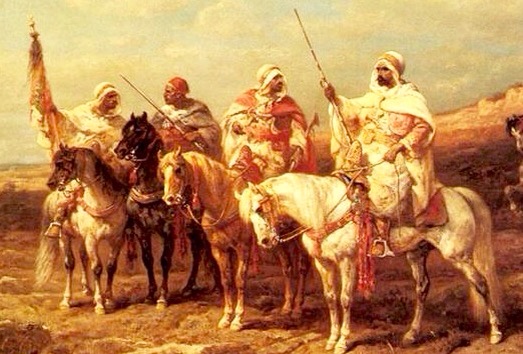
The Mission
March 13, 1915 – Karachi 0800
Captain Philip Harrison Craven, pilot, and Sir Lyton Niven, expert infiltrator and acquisition specialist, were summoned to the British Imperial Army headquarters near Karachi for a mission briefing. Reginald Smyth-Wilson, the Army Intelligence Liaison, ushered them into the map room.
The Ottoman siege of British forces in Kut, Mesopotamia is having a terrible impact on both morale and resources for the Imperial forces. Four attempts to relieve the British and Indian troops there have failed. If the siege is not broken soon, the fate of 11,000 men there is bleak.
The Ottoman forces are led by German officers, but the troops are indigenous, and largely organized in tribal units. The cohesion of these forces is tenuous, subject to the whims of the individual chieftains.
British sources in country among the Ottoman forces tell us that there is a legend of an ancient scepter that was said to be buried with Amir Khan, who was ruler of Beradost on the Mesopotamian-Persian border until 1610.
The legend says that the bearer of the scepter is lawful ruler of the Kurds. The location of Amir Khan’s tomb has been lost to the centuries, but our man in Tehran tells us that a mining expedition in the Dasht-e-Kavir desert of northern Persia has discovered a tomb that had been buried in the sand.
Our scholars agree that, based on available information, the tomb could be that of Amir Khan. Following the Battle of DimDim, which the Kurds lost, Beradost was razed and the inhabitants relocated to Khorasan, which is the region where this tomb was found.
The diplomats believe that, should the scepter be recovered, the Ottoman forces around Kut would lose cohesion. The General Staff believe that, if this should this happen, the forces in Kut could be relieved and a catastrophe averted.
Your mission is to find the Tomb of Amir Khan, recover this scepter if it exists, and return with it.
Logistics
You will be issued an Avro 504K with extra fuel tanks to transport you to refueling stops at Kandahar and Herat, and into the engagement zone. You should be able to get as far as a village called Bejestan in the non-aligned zone between the Russian and British influence zones, where a local guide, an Arashk Velati, will meet you and take you to the tomb. Using the fuel in the extra tanks should enable you to fly back to Herat and ultimately back to Karachi.
You will also each be issued local gear, including leather-lined clothing, a short sword of the local variety, a revolver, and a rifle. The weaponry is a mixed bag there, so your equipment should fit in splendidly. The gear will be provided in Herat to save weight on your journey.
Your mission is of the utmost secrecy. Strictly on a need to know basis. Should the locals learn of your mission, you could find yourself facing anything from opportunists to zealots protecting their cultural treasures or other such nonsense. And the people in that region are not the forgiving type.
After the briefing, Niven requested that locking picking tools and other materials be provided to assist in entry to a tomb. Smyth-Wilson had him draw up a list that would be telegraphed to Herat. Whatever was available would be assembled there.
The Journey
They departed at 1000. Each leg of the flight took about three hours, and it got increasingly colder as the elevation increased and passing through the mountains. There were no other aircraft in the sky for the trip to Kandahar. They landed in a field outside the city at 1300, where the local garrison had been alerted to expect their arrival by telegraph. After flying across the desert in the open cockpit, Craven and Niven needed a break from the chill, and they were entertained and provided a hot meal by the garrison commander, Captain Orville Dawson, while the plane was refueled.
They were again on their again way around 1430. The flight over the mountains was more rigorous on account of the air currents between the peaks, and just as cold. Again, there were no other aircraft around until they crossed into the Herat valley and flew over the great Citadel at Herat as the sun was setting behind the peaks around 1800. There were two Bristol Scout fighters parked by the side of the field. The garrison there was also prepared for their arrival.
There was a full regiment of British troops stationed at Herat, charged with preventing an Ottoman incursion into Afghanistan. The commander, Colonel Reginald Cartwright, informed the pilot and his passenger that tribal raiders had been active in the mountains to the west, and his troops had been tasked with policing the area by the Afghan Khan to keep the European War from violating Afghan neutrality. But was too cold to fly now unless absolutely necessary. Nevertheless, they had captured clothing and equipment from scouts and insurgents that should enable the team to blend in in country, and what could be found of the requested equipment had been collected. There would be a full moon that night, and scattered clouds. Colonel Cartwright suggested that if they set out again as soon as the plane was refueled, they could be in the target zone around 2300.
Their equipment was loaded and the plane refuleled and fitted with an external fuel pod. As such, when they took off at 1930, Craven found the plane sluggish. Traveling over the western mountains, the air currents were constantly shifting, and Craven had to fight with the Avro to negotiate the mountain passes. As they burned the fuel, the aircraft retrned to flying trim.
Once they had cleared the mountains, they found that the terrain beyond flattened out rapidly in to a high desert plain. Large rock formations dotted the landscape infrequently. There was no sign of civiliation anywhere.
Around 1000, Niven spotted another aircraft coming toward them. It was an Ottoman fighter. The winds were unpredictable, and both planes were buffeted. The skill of the pilots were taxed. Eventually, Niven succeeded in hitting the enemy fighter, igniting the fuel, and the aircraft fell from the sky.
In Country
About an hour later, they came upon the designated coordinates and spotteed a bonfire amidst a rocky outcropping. Landing the Avro on the packed sand nearby, Craven and Niven were greeted by a small man dressed in native winter garb waiting with four shaggy horses. The night was cool, and the featureless terrain did little to stop the chill wind. The bonfire was sheltered from the win, and there was a pot on a spit over it. The man introduced himself in English as Arashk Velati and offered them some lamb stew.
Velati had brought camouflage netting to drape over the plane. He explained that no one had any reason to come to that location, so the airplane should not be disturbed. He recommend camping for the night and setting out in the morning on account of the cold winds. It would take three days on horseback to get to Bejestan, the nearest town, detouring to refresh their water supply at an oasis along the way. It would then be another day to the mining camp.
After camoflaging the Avro and eating some stew, they bedded down using supplies that Velati had brought on the fourth horse. They set out three watches. The guide volunteered to take the first watch to allow the weary travellers some rest.
Unexpected Company
Shortly after the pilot and the gentleman got comfortable, Velati heard the sound of horsemen approaching. He awakened Niven, who took a concealed position amond the rocks. As the horsemen got nearer, approaching from behind the outcropping, they stopped and one of them greeted the camp formally. Velati responded in kind. He noted that they were Baluchs from the region near the Afghan border, probably heading for another Baluch area northwest of their own destination.
The horseman said that he and his party were travelling west from the foothills and needed water. Velati replied that he nearest oasis was two days west. The traveller asked if he had any water to spare. Velati offered them a spare waterskin he had brought.
The four Baluchs rode into the camp. They were polite and offered Velati some tobacco. Velati offered them some of his stew, for which they offered flat bread. By this time, Craven, who had been sleeping soundly, awoke. The new arivals were coridal to him as well. They asked if they could camp in the shelter of the stones. Velati agreed without consulting the others. Niven returned to camp a moment later, surprising the Baluchs, but they did not react. After a brief conversation via Velati, for the others did not speak Farsi, Niven and one of the Balchs took up the watch.
Toward the end of their watch, the Baluch grew agitated. He gestured to Niven regarding the increasing winds, and then awoke Velati, who informed him that a sandstorm was coming. They quickly roused the others, hobbled the horses, and all took shelter beneath their blankets among the rocks. The storm was furious and lasted past sunrise. When it finally passed, the sun was already high. The Avro, which the newcomers had not seen in the darkness, having approached from the opposite direction, had been buried.
The Baluchs expressed their gratitude before departing. They were all heading for the oasis, but the horsemen did not want to travel together, which suited the team as well. They waited until the Baluchs were on the far horizon before following them. They proceeded for several hours before the others veered northward. Velati surmised that they must have thought that the water he had provided would be sufficient to reach their destination.
Continuing on their own course, Niven’s horse was startled by a large snake that lunged at it. The snake missed, and Niven, a novice rider, expertly steered his mount around the reptile. As the sun was setting in the west, they spotted the oasis and noticed that there was already a party there.
At the Oasis
There were four horsemen with six horses at the oasis. Two of them were filling water skins while the other two guarded their horses warily. Two of the horses were loaded down with bundles, and Craven noted that there was movement within them. They were slavers, and his code of honor would not allow it. Velati tried to calm the American, saying that it was a part of life there, but only delayed his wrath.
The men at the well did not speak, but warily watched the team approach and fill their skins. Craven’s anger was evident, and the strangers took their full waterskins and backed away to their horses. As they mounted to ride off, Craven would wait no longer. He drew his revolver and shot one of the water bearers off his horse. Velati refused to participate.
Niven drew his rile and shot another of the horsemen. That left two riders pulling the two pack horses. Craven shot one of the pack horses, which fell to the ground, pulling the rider off of his horse. Niven shot out the other remaining rider. The well trained horses stopped when their riders fell.
While Craven and Niven saw to the bundles, Velati looted the bodies, collecting their weapons, ammunition, food and water. He threw the coin purse at Craven in disgust. The bundles each contained a young woman, gaggled and shackled. Craven ungagged them and offered them water while Niven located the keys and released them from their chains.
The women were leery of Velati. One of them seemed to warm up to Craven, but both of them swooned for attractive English gentleman and opened up. Velati translated and they told their rescuers that they had been abducted from Bejestan. Their father would be grateful and reward them for their safe return.
The Team
- Sir Lyton Niven, Gentleman Thief and Spy
- Capt. Philip Harrison Craven, WWI Flying Ace
- Arashk Velati, Persian guide